
Table of Contents
- Introduction
- Pilates Instructor: More Than Just a Workout Coach
- Finding the Pilates Instructor Who Fits Your Goals
- Safety Standards in Structured Pilates Training
- FAQs
- Assessment-Based Exercise and Movement Planning
Walk into any fitness studio today, and you’ll notice something has shifted. People aren’t just chasing sweat and burnout anymore. They want workouts that respect their bodies, and that’s exactly why the role of a Pilates instructor has become so central to modern training.
A good Pilates instructor doesn’t just count reps. They watch how you move, notice what your body is trying to tell them, and build sessions around that. Here we breaks down what actually makes an instructor worth your time, money, and trust.
Pilates Instructor: More Than Just a Workout Coach
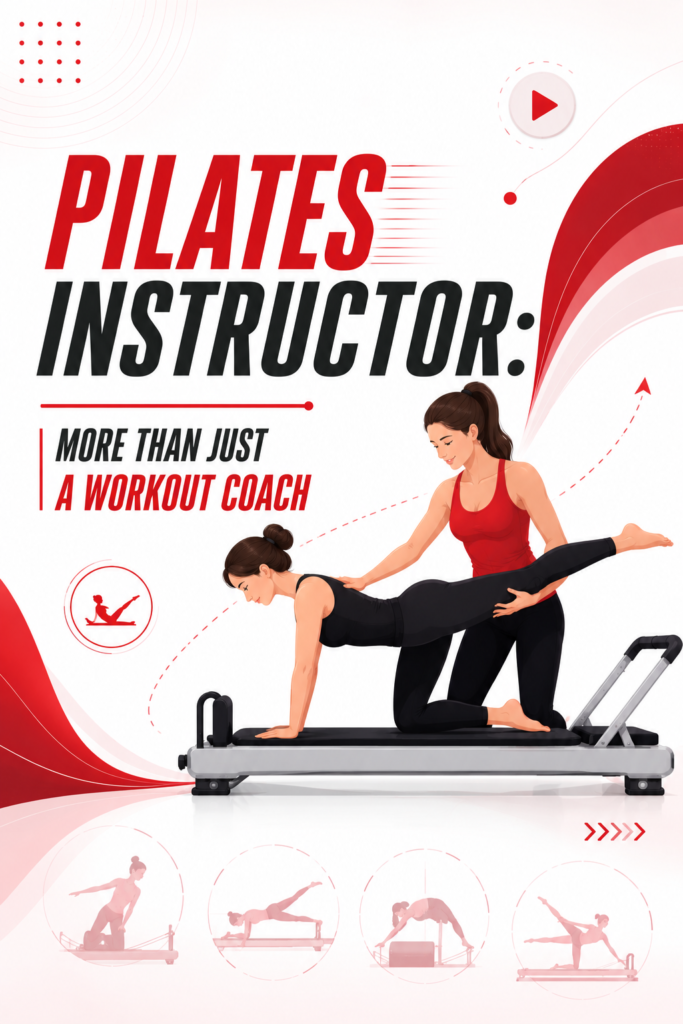
Think about the last fitness class you attended. Did the trainer actually look at how your spine moved, or were they just calling out numbers?
That difference is everything. A skilled pilates instructor blends anatomy knowledge with genuine coaching instinct. They’re reading your posture, your breathing pattern, even the slight hesitation in your movement.
Here’s what separates a valuable instructor from an average one:
- They personalize, not templates. Your pilates workout should look different from your neighbour’s, because your body isn’t the same.
- They explain the “why.” Good instructors don’t just demonstrate; they tell you why an exercise matters for your specific goals.
- They track progress meaningfully. Not just strength, but control, flexibility, and body awareness over time.
- They adapt on the spot. Bad night’s sleep? Old injury acting up? A great instructor adjusts the session without missing a beat.
This is what turns a session on a mat or a Pilates reformer into something that actually changes how you move through daily life.
Finding the Pilates Instructor Who Fits Your Goals
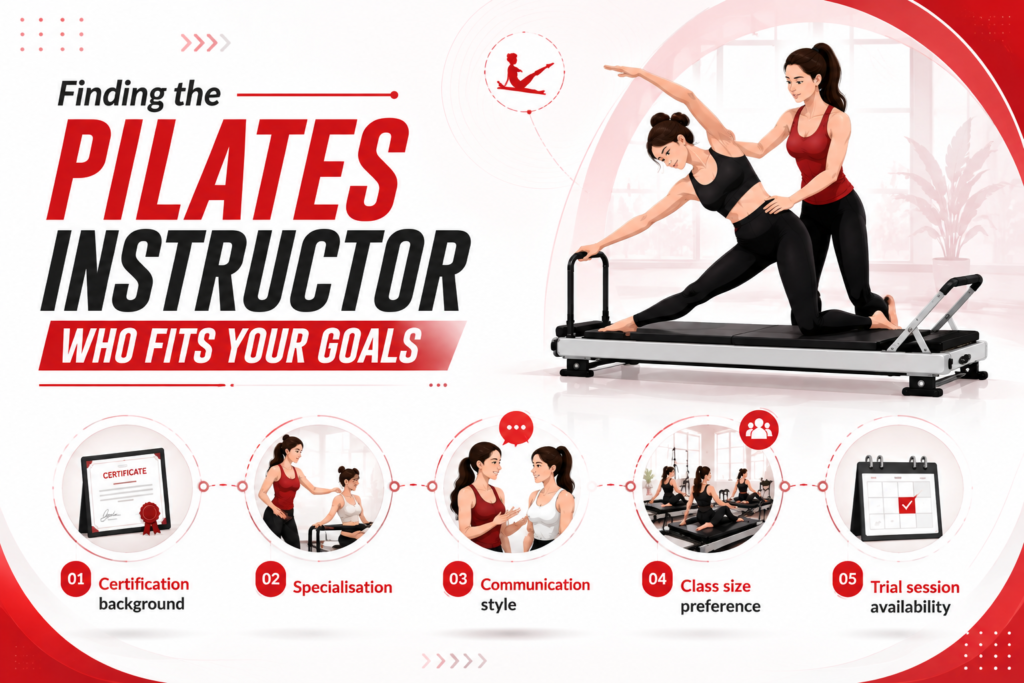
Not every instructor suits every body. That’s just the truth, and it’s worth accepting early. If you’re searching for best pilates classes near me, don’t just look at studio photos or star ratings. Ask a few direct questions first.
What to check before you commit:
- Certification background – Ask where they trained and whether it covers mat and reformer work both.
- Specialisation – Some instructors focus on rehab, others on athletic performance or prenatal care.
- Communication style – Do they explain cues clearly, or leave you guessing mid-pose?
- Class size preference – Smaller groups usually mean more individual correction.
- Trial session availability – A confident instructor will happily let you test one class first.
If you’re based locally and searching for a pilates studio near me in South Delhi, visiting in person before signing up makes a real difference. You get to feel the energy, check the equipment, and see how the instructor interacts with existing students.
Safety Standards in Structured Pilates Training
Pilates looks gentle from the outside. It really isn’t always. On a Pilates reformer, springs, straps, and resistance can go wrong fast without proper guidance.
A valuable instructor treats safety as non-negotiable, not an afterthought.
Here’s what proper safety practice actually involves:
- Checking equipment settings before every single session, not occasionally.
- Screening new clients for injuries, surgeries, or existing conditions upfront.
- Correcting form immediately rather than letting bad habits build over weeks.
- Progressing intensity gradually instead of pushing advanced moves too soon.
- Keeping class sizes manageable enough for real-time supervision.
When these standards are missing, injuries happen quietly, often showing up days later as unexplained soreness or strain. That’s the hidden cost of an unsupervised or rushed Pilates workout.
FAQs
1. How is pilates different from a regular gym workout?
Pilates focuses on controlled movement, core stability, and alignment rather than raw exertion. It builds strength from the inside out.
2. Do I need prior fitness experience to join pilates classes?
Not at all. Most instructors design beginner-friendly sessions and build intensity as your body adapts.
3. How often should I attend pilates sessions weekly?
Two to three sessions a week is a solid starting point for noticeable improvement in strength and posture.
4. Is reformer pilates better than mat pilates?
Neither is “better” outright. Reformer adds resistance and support; mat relies more on bodyweight control. A good instructor picks what suits you.
Assessment-Based Exercise and Movement Planning
Cookie-cutter plans don’t work long-term, and honestly, most people know this already deep down. That’s why assessment-based training matters so much. Before designing your program, a genuinely skilled instructor evaluates your posture, breathing pattern, flexibility, and any pain points. From there, they build a plan that evolves with you.
At Excel Pilates, South Delhi, this is exactly the approach followed. Every client starts with a proper movement assessment, not a generic routine pulled off a template. Whether you’re recovering from an injury, chasing better posture, or simply want a smarter workout, the sessions are structured around what your body actually needs.
📞 Call now at 9990963846 to book your assessment and experience training that’s built around you, not the other way around.