
Mat Pilates Exercises: Can They Help Correct Common Posture Problems?
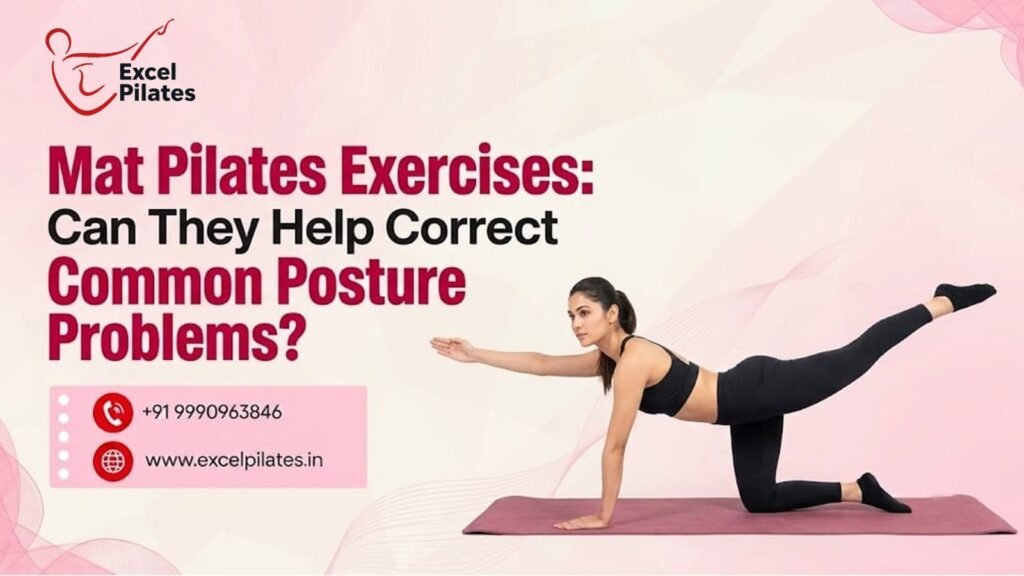
You sit down to work. A few hours go by. You notice your face is almost touching the laptop, your shoulders are hunched forward, and your back feels off. This happens to a lot of people. Bad posture usually comes from habits you repeat every day. That’s why mat Pilates exercises can be helpful. Instead of telling you to “sit up straight” all the time, Pilates builds strength, control, and movement that make good posture easier to hold. Pay Attention to How Your Body Moves Posture isn’t about staying perfectly straight from morning to night. Your body shifts every time you walk, sit, reach or stand. A regular Pilates workout helps you notice those shifts. It lets you see how your body moves. Mat Pilates exercises often include: The moves are slow and controlled, not rushed. That gives you time to feel where you’re tight or weak and where you need control. What Sitting at a Desk Does to You Think about a workday. You start with your laptop at a distance. Then you lean in a bit. Later, your shoulders round and your head moves closer to the screen. By the end of the day, that slouched position feels normal. This is where mat Pilates exercises can fit into your routine. Moves like curls, spine articulation, swimming variations and controlled leg lifts work different parts of your body. They also make you pay attention to how you’re moving. They don’t look hard. Doing them with control? That’s the challenge. How Mat Pilates Exercises Can Support Your Back When your lower back feels tight, stretching is usually the first thing people try. But sometimes it’s not your back, it’s how your pelvis and core work together. Some mat Pilates exercises involve controlled movement and strong abdominal engagement while your spine moves. This helps you notice your position when bending, extending or lifting your leg. That doesn’t mean Pilates fixes every back problem. If you’re in pain or hurt, choose exercises that fit your condition. Rounded Shoulders? Start Moving Differently Spending hours at a desk or looking down at your phone can mess with how your upper body sits. A Pilates workout can include moves for your back, shoulders and arms. It doesn’t just tell you to “push your shoulders back.” Instead, it helps those areas move better together. That’s more useful in life. Posture isn’t for standing still. You need it when you work, walk, pick things up or even relax. Where Does Reformer Pilates Fit In? Mat Pilates and Reformer Pilates aren’t the same. Reformer Pilates uses a machine with springs and a sliding carriage. Mat Pilates uses your body weight. Both build strength and control. So which is better? There’s no one-size-fits-all answer. Some people start with mat work. Others prefer the resistance and support of a reformer. If you’re looking for a Pilates mat class in South Delhi, check out the instructor and how the class is taught. When searching for Pilates mat classes near me in South Delhi, it’s tempting to pick the closest one. Good instruction matters more than distance. Questions You Might Actually Have Give Your Body a Way to Move Mat Pilates exercises aren’t a magic fix for posture problems. They can help you build strength, mobility, and awareness that carry into daily life. You don’t need to think all day about sitting. With Pilates, the goal is to make controlled movement feel natural. At Excel Pilates, you can practice mat-based Pilates with guidance focused on movement and technique. If you’re looking for a Pilates mat class in South Delhi, connect with Excel Pilates to find a class that fits your goals.
Strength, Balance, or Flexibility? A Certified Pilates Teacher Reveals How to Start Right
Walking into your first Pilates class can leave you with a strange mix of excitement and doubt. You see people moving confidently on the reformer and wonder, “Am I supposed to know all this already?” Not at all. A certified Pilates teacher will tell you that Pilates is not about matching someone else’s pace. It is about understanding your own body and building from there. Maybe your goal is stronger muscles. Maybe your back feels stiff after sitting at work all day. Or perhaps you simply want to move better. Whatever brings you to Pilates, there is a place to begin. Start With What Your Body Is Telling You Before worrying about advanced exercises, pay attention to how you move. Do your hips feel tight? Do you struggle to stand on one leg? Does your posture change after sitting for several hours? These little clues can help determine where you need to begin. A good instructor may look at: · Your posture and alignment · Your balance and coordination · Areas that feel tight or restricted · Your previous exercise experience There is no perfect starting point. The right one is simply the one that suits your current ability. Stronger Does Not Always Mean Harder Pilates can look gentle from the outside, but spend a few minutes holding a controlled position and your muscles may tell you another story. A Pilates Workout focuses on control, breathing, alignment, and steady movement. You are not racing through repetitions. Instead, you learn to use your muscles properly. That approach can gradually build strength in the core, legs, arms, hips, and back. And that strength is useful beyond the studio, from carrying bags to climbing stairs or maintaining better posture at your desk. Then Comes the Balance Test Balance sounds simple until you are standing on one leg. Suddenly, your ankle, core, and concentration are all working together. Pilates uses movements like these to improve stability and body awareness. If an exercise feels too difficult, a certified Pilates teacher can modify it rather than asking you to push through. That small adjustment can make a big difference, especially when you are still learning how your body responds. Flexibility Is Not a Competition You do not need to touch your toes or perform impressive stretches before starting Pilates. Flexibility develops gradually. The aim is to move through a comfortable range instead of forcing your body into positions it is not ready for. Regular practice can help movements feel easier and less restricted. For anyone who spends long hours at a desk, this can be a welcome change from staying in the same position all day. Choosing a Studio? Look Beyond the Location Your first Pilates Studio should feel comfortable enough for you to learn without feeling judged. The instructor should explain movements clearly, watch your technique, and offer alternatives when necessary. If you are considering Pilates in South Delhi, look beyond convenience. Class size, instructor experience, equipment, and beginner support can all affect your experience. Even if your search starts with “the pilates studio near me,” take a little time to understand what the studio actually offers before booking. Your First Class Is Not a Performance You might wobble. You might forget an instruction. You might discover that a movement you thought would be easy is surprisingly challenging. That is perfectly fine. Your first class is simply an introduction. Concentrate on breathing, listen to the instructor, and learn how each movement feels. Progress comes with repetition, not from getting everything right immediately. When comparing options for the Best Pilates in South Delhi, look for an environment that values good technique and gradual progress over pushing beginners too quickly. Three Goals, One Practice Strength, balance, and flexibility are not competing goals. They work together. As your control improves, one can support the others and make everyday movement feel more natural. With guidance from a certified Pilates teacher, you can build your practice at a pace that feels realistic rather than overwhelming. You do not need to be ready before your first class. You become more capable by showing up, learning, and keeping going. Begin your Pilates journey at the Pilates studio near me, Excel Pilates, and discover what your body can do.
Pilates Strength Workout for Better Core Strength and Stability
You know that feeling when your body feels tired even though you have not done anything particularly strenuous? Maybe you have spent hours at your desk, climbed a few stairs, or simply gone through a busy day. By evening, your back feels stiff, your posture has changed, and you realise how much work your body does just to keep you moving. This is where a Pilates Strength Workout can make a real difference. Pilates is not about rushing through dozens of repetitions. It is about slowing down, paying attention, and making your muscles work properly. With regular practice, those small, controlled movements can build impressive strength, especially around your core. Pilates Strength Workout: Where Slow Movements Start Feeling Surprisingly Powerful At first glance, a Pilates exercise may not look difficult. There are no heavy weights crashing onto the floor and no endless jumping. But hold a position for a few seconds with the correct form, and you quickly realise that your muscles are working. That is one of the things people often discover when they begin Pilates. The workout focuses on controlled movements that challenge your muscles while asking you to maintain balance and proper alignment. Over time, this can help with: The best part is that the exercises can be adjusted as your strength improves. What feels challenging today may become comfortable a few weeks later. Your Core Is More Than Just Your Abdominal Muscles When people talk about core strength, the first thought is usually toned abs. But the core has a much bigger job. It supports your spine, helps stabilise your pelvis, and gives your arms and legs a steady base from which to move. If the centre of your body is weak, even simple movements can feel less controlled. Pilates works on this foundation through exercises such as bridges, planks, leg movements, roll-downs, and abdominal sequences. As an Exercise for Core Strength, it encourages you to use your muscles with intention rather than relying on momentum. A good Pilates Instructor also helps you understand what you should actually be feeling during each movement. Reformer Pilates: When Resistance Changes the Game There is something satisfying about stepping onto a Reformer and seeing all the springs, straps, and moving parts. It may look complicated initially, but each element has a purpose. Reformer Pilates introduces resistance while allowing movements to remain controlled. A simple-looking leg exercise can suddenly become much more challenging when the springs are involved. The same goes for exercises targeting your arms, back, hips, and core. The resistance can be changed according to your level and goals, making Reformer work suitable for beginners as well as people who have been exercising for years. More resistance does not always mean better results, though. Good form still comes first. Why Your Instructor Notices Things You Don’t During a Pilates Workout, you may think you are doing everything correctly. Your instructor might see something completely different. Perhaps your shoulders are creeping upwards. Maybe your lower back is taking over. Perhaps you are holding your breath without realizing it. These tiny details matter. An experienced Pilates Instructor can make small corrections that change the entire exercise. You learn where to place your feet, how to position your spine, when to breathe, and how to engage the right muscles. Eventually, you start noticing these things yourself. That awareness can become useful far beyond the Pilates Studio. Strength That Follows You Outside the Studio The real test of a workout is not always what happens during the session. It is what you notice afterward. Maybe you sit at your desk without constantly adjusting your position. Perhaps climbing stairs feels easier. You may find yourself standing taller while waiting in a queue or carrying groceries without feeling as unsteady. These everyday changes can be easy to overlook because they happen gradually. A consistent Pilates routine works towards creating a body that feels stronger and more capable, rather than simply making you tired for an hour. Give Your Body Time to Get Stronger You do not need to start with advanced exercises. In fact, starting with the basics is often the smartest approach. Learn the movements. Understand your breathing. Build control. Then gradually increase the challenge. At Excel Pilates, sessions can help you work on strength, stability, flexibility, and better movement in a supportive setting. Whether you are trying Pilates for the first time or looking to take your practice further, the right guidance can make the journey easier. A stronger core is not built in one session. It comes from showing up, paying attention, and giving your body a chance to improve. Sometimes, the smallest movement can be the beginning of a much stronger body. Ready to get started? Explore Pilates at Excel Pilates and discover what your body can do with the right training.
What Happens When You Focus on Pilates and Core Strength Together?
You know that feeling when an exercise looks easy until you actually try it? That can happen quite often in Pilates. A movement may look slow and simple, but once you try to keep your hips steady, your spine in position, and your breathing controlled, you realise there is much more going on. Now add a stronger focus on your core. A basic Pilates movement can suddenly feel more challenging. You become more aware of how your body is positioned and how much control you have over each movement. That is what makes Pilates and core strength such a useful combination. Pilates already works the core, but paying extra attention to core strength can change the way you approach the exercises. It Starts With More Than Your Abs When people hear “core strength,” they usually think about their abdominal muscles. But the core has a bigger job. The muscles around your abdomen, pelvis, and lower back help keep your body stable while your arms and legs move. Take a simple Pilates exercise. Your leg moves, but your hips need to stay still. Your upper body moves, but your spine needs to remain controlled. That is where the core comes in. When you focus on core strength, you become more aware of keeping that stability throughout the exercise rather than letting your body shift from one position to another. A Slow Movement Can Tell You a Lot There is a reason Pilates movements are often performed slowly. When you rush through an exercise, you may not notice small changes in your posture. Slow the movement down, and those little details become much easier to spot. Your hips might start moving. Your back might lift slightly. You may even hold your breath without realising it. A good Pilates workout gives you time to notice these things and work on them. The goal is not to make every exercise look perfect. It is to understand your movement and gradually get better at controlling it. Then Comes the Reformer A Pilates reformer can make this combination even more interesting. The carriage and springs add resistance to different exercises. Depending on the movement, the equipment can either support you or make you work harder. Imagine pushing the carriage with your legs while trying to keep your pelvis from moving. Your legs are doing the obvious work, but your core is helping you stay steady. That is the kind of situation where you really notice the connection between Pilates and core strength. You are using strength while also having to control where that strength goes. The Work Does Not Stop When Class Ends Core strength has a place outside the studio too. Think about getting up from the floor, carrying a shopping bag, reaching for something, or sitting at your desk. These everyday movements involve your trunk, hips, and limbs working together. Pilates can make you more conscious of those movements. You may start noticing when you slouch, how you stand, or whether you rely too much on one side of your body. It is not about holding your stomach all day. It is about becoming more familiar with how your body creates stability. Finding the Right Class in South Delhi If you are searching for pilates for core strength in South Delhi, there is no need to jump straight into the most difficult class. Someone new to Pilates may first need to understand basic positions, breathing, and movement patterns. With experience, more challenging exercises and equipment can be introduced. The instructor matters too. Good guidance can help you understand what you should be feeling during an exercise instead of simply copying the movement. So, if you are looking for the best Pilates classes near me, consider the class level, instructor, equipment, and type of session before making your choice. What Happens When You Put the Two Together? This is where things get interesting. Pilates gives you controlled movements. A stronger focus on the core asks you to maintain stability while performing those movements. Together, they can make you pay closer attention to balance, posture, and control. You may find that an exercise you could complete easily becomes more demanding when you focus on keeping your centre steady. Later, that same exercise may feel smoother because you have become more familiar with the movement. That small change from simply doing an exercise to actually controlling it is an important part of Pilates. Make Your Strength Work With You Pilates and core strength are not about isolating your stomach muscles and working them until they are tired. The bigger idea is to build strength that you can control while your body moves. For people in South Delhi who want to explore this approach, Excel Pilates offers Pilates sessions where controlled movement, technique, and focused practice come together. Whether you are new to Pilates or already have some experience, the right routine can help you understand your body a little better with every session. Ready to give your core more attention during Pilates? Explore Excel Pilates and find a session that works for you.
Is Pilates for Core Stability Useful If You Spend 8+ Hours at a Desk?
You open your laptop at 9:30, planning to attend one quick meeting. Two more calls, a flood of emails, and a sandwich eaten over the keyboard later, it’s 6:30 in the evening. Your neck is stiff, your lower back is grumbling, and your abdominal muscles feel like they clocked out hours ago. Sound familiar? For anyone sitting eight hours or more a day, Pilates for Core Stability offers a realistic way to rebuild control and strength in everyday movement. The method puts slow, deliberate exercises, steady breathing, good alignment, and core engagement ahead of piling up reps. Some studies suggest it can improve posture too, though researchers agree more work is needed. What Long Hours at a Desk Do to Your Body Sitting all day doesn’t automatically make your core weak. The bigger issue is that you stay locked in one position, move in fewer ways, and slip into the same slouch again and again. Common signs include: A regular core stability workout can slot neatly into a packed schedule and start addressing these patterns. More Than Just Abs Core stability isn’t about a visible six-pack. It’s about the muscles of your abdomen, back, pelvis and trunk cooperating to keep your movements controlled. In a Pilates class, you learn to: This is why Pilates for Core Stability feels nothing like grinding out crunches. Tiring your stomach isn’t the aim. The aim is to teach your body to stay organised while it moves. From Desk Chair to a Stronger Centre Picture the end of your workday. You push back from the desk, stretch out your spine and head for the kitchen. Now imagine doing that with more control and less strain. Pilates and core strength go hand in hand because the centre of the body supports nearly every movement in a session. Rather than working the core as an isolated area, Pilates weaves it into whole-body motion. For office workers, the benefit reaches beyond the studio. The body awareness you build can prompt you to fix your sitting position, release needless tension, and move with more intention while you work. What a Session Might Look Like A trainer will usually tailor exercises to your strength, flexibility, and goals. Your routine could target: Quality matters most here. Hurrying through exercises makes good form harder to keep. Break Up the Sitting Pilates isn’t a substitute for moving during the workday. It works best alongside a few simple habits: Short movement breaks combined with structured training make your routine far more balanced. Core Muscle Exercises in South Delhi If you’re hunting for core muscle exercises in South Delhi, guided Pilates gives you a structured setting to build strength, mobility and control. At Excel Pilates, classes cover Mat, Reformer and Cadillac Pilates, alongside strength and stability-focused training. Your body has to carry you through life long after the laptop shuts, so building stability pays off every single day. If “the Pilates studio near me” keeps showing up in your searches, take it as a nudge to stop scrolling and start moving. Discover Excel Pilates in South Delhi and lay a stronger, steadier foundation for all those hours at your desk
I Don’t Have Time to Exercise.” Here’s Where Reform by The Pilates Studio Fits In
If you’ve ended your day thinking, “I really should have worked out today” for the fifth day running, you’re not the only one. Between work deadlines, commutes, family responsibilities, and the general mess of daily life, exercise is usually the first thing that gets pushed to tomorrow. The problem isn’t that people don’t care about their health — it’s that most fitness routines are built for people who already have an hour to spare, which most of us don’t. This is where Reform by The Pilates Studio actually makes a difference. It’s built around real schedules, not the ideal ones fitness ads like to show. Does an Effective Exercise Routine Have to Be Time-Consuming? Not really, and this is one of the biggest misconceptions people carry around when they think about getting fit. How Reform by The Pilates Studio Can Fit Into a Busy Routine Reform by The Pilates Studio doesn’t ask you to redo your calendar. It slots into gaps you probably already have. Why Structured Workouts Can Make Exercise Easier to Maintain People rarely quit exercise because it’s hard. They quit because it feels disorganised, repetitive, or they just can’t tell if it’s working. FAQs About Reform by The Pilates Studio 1. How is Reform by The Pilates Studio different from a regular gym workout? The Pilates reformer uses spring-based resistance along with controlled, deliberate movement — it works on strength and flexibility at the same time, rather than isolating one muscle group like most gym machines do. 2. Can a complete beginner join without prior fitness experience? Yes, and it’s actually a common starting point. A qualified Pilates instructor adjusts the resistance and pace based on where you’re currently at. 3. How many sessions a week make sense for someone with a packed schedule? Two to three sessions is usually enough to notice real Pilates workout benefits without throwing off the rest of your week. 4. Does Reformer Pilates help with back pain from sitting at a desk all day? Quite often, yes. The posture- and core-focused exercises on the Pilates reformer tend to ease the tightness that builds up from long hours at a desk. 5. What should I actually check before choosing a Pilates studio near me in South Delhi? Look at the instructor’s certification, how small the class sizes are, and whether the reformer equipment looks properly maintained — all three affect how safe and useful your sessions turn out to be. Making Reformer Pilates Part of Your Weekly Schedule Working Reform by The Pilates Studio into your week isn’t really about finding extra hours. It’s about using the ones you already have a little better. Proximity matters more than people admit. A studio close to home or work cuts down the friction that usually causes people to skip sessions in the first place. Excel Pilates is worth checking out. With experienced Pilates instructors, well-kept reformer equipment, and class timings that actually work around a real job, it makes it simpler to show up instead of just planning to. And if you’ve been searching for a Pilates studio near me in South Delhi that fits into your life rather than taking it over, Reform by The Pilates Studio at Excel Pilates is a good place to start.
Can Cadillac Pilates Improve Movement Control Without High-Impact Training?
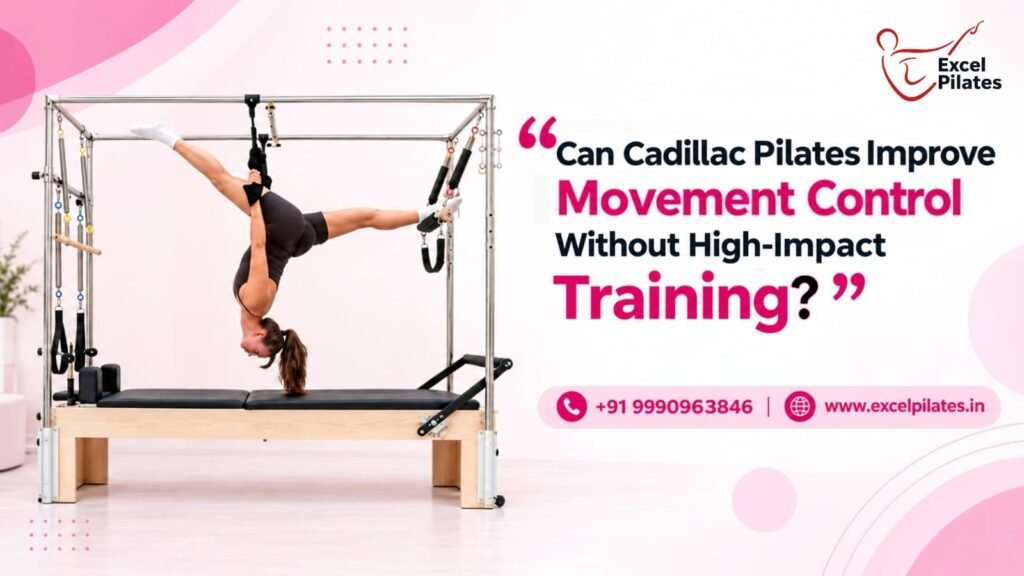
A person may walk into a Pilates studio thinking, “I just want to move better.” Maybe getting up from the floor feels awkward, reaching overhead feels restricted, or balancing on one leg is not as steady as before. They may not want a workout filled with jumping or fast movements either. This is where Cadillac Pilates can be worth exploring. The focus is not on rushing through exercises. It is about understanding your movement, building control, and gradually becoming more comfortable with what your body can do. When Simple Movements Tell a Bigger Story During a Cadillac Pilates session, an exercise may look almost too simple. Someone might be lying down, holding a bar, or working with a spring. Then they try it. Suddenly, keeping the hips still while moving one leg becomes harder than expected. The shoulders start to tighten. The breathing changes. That is the interesting part. Instead of hiding these small movement habits, Pilates gives you a chance to notice them. Cadillac Pilates Is About Control, Not Speed The Cadillac apparatus uses springs, bars, straps, and other attachments to support different exercises. This gives the instructor several ways to adjust a movement. Depending on the session, you may work on: With Cadillac Pilates, the goal is not necessarily to finish as many repetitions as possible. Paying attention to how you move can be just as important. A Small Adjustment Can Change the Exercise Imagine someone doing an exercise and feeling it mostly in their lower back. An instructor notices this and changes the spring setting or asks them to adjust their position. The same exercise suddenly feels different. This is one reason guidance matters. A certified Pilates teacher can make small changes based on how you move instead of expecting everyone in the room to perform an exercise in exactly the same way. A good Pilates instructor can also help you progress slowly as your control improves. Why Low-Impact Does Not Mean Boring Some people hear “low-impact” and immediately think the workout will be too easy. That is not always the case. Cadillac Pilates can make you work hard without relying on jumping or fast movements. Holding a position, controlling a spring, or moving one part of the body while keeping another part stable can be surprisingly demanding. It can also suit people who simply prefer a calmer approach to exercise. What If You Are Searching for Classes? If you are looking for Pilates Cadillac classes near me in South Delhi, take some time to understand how the classes are conducted. Ask yourself: These details can make the experience much more comfortable. Finding the Right Place for Your Practice If you are searching for Cadillac Pilates near me in South Delhi, location is only one part of the decision. The teaching style, instructor experience, class size, and overall approach matter too. And if you keep typing the Pilates studio near me into your search bar, Excel Pilates is a place where you can explore Pilates with proper guidance and work towards better movement control. FAQs 1. I have never tried Pilates before. Can I start with Cadillac Pilates? Yes. Cadillac Pilates can be adjusted for beginners. A certified Pilates teacher can introduce you to the equipment and begin with movements that feel manageable. 2. What should I check before joining Pilates Cadillac classes near me in South Delhi? When comparing Pilates Cadillac classes near me in South Delhi, check the instructor’s experience, class size, equipment, and whether the Pilates instructor gives individual guidance. 3. How do I know if a certified Pilates teacher is right for me? A good certified Pilates teacher should explain exercises clearly, watch your form, answer questions, and modify movements when necessary. The right Pilates instructor should also help you progress at a comfortable pace. 4. Is Cadillac Pilates a low-impact workout? Yes. Cadillac Pilates can offer a low-impact way to work on strength, mobility, balance, and control without making jumping or high-impact movements the centre of the workout.
Is Reformer Pilates a Good Workout for a Busy Lifestyle?
When your day is full of work, family, and traffic, exercise is the first thing you skip. You know you should move more. You just don’t have the time or the energy left. This is where Reformer Pilates helps. The sessions are short and planned for you, and they work your whole body without making you too tired for the rest of the day. Let’s see how it fits into a busy week. Where Reformer Pilates Fits Into a Packed Day More Movement, Less Time: What a Session Covers One reformer class works many parts of your body together. The machine has springs and a sliding carriage that add resistance, so your core, legs, arms, and back all get worked in the same session. A class usually starts with a warm-up, moves into strength work, then some stretching, and ends slowly. Because every move is slow and controlled, you build strength and flexibility at the same time. Your Pilates instructor changes the spring load and pace to suit you, which keeps the class safe for your joints. This is one of the main pilates workout benefits people love: a full-body workout in about an hour, and you walk out feeling light and energized instead of drained. What Changes When Reformer Pilates Becomes Consistent? FAQs 1. How often should I do Reformer Pilates if I have very little time?Two to three classes a week is a good start. It is enough to build strength and flexibility, and it fits around work and family. 2. Do I need any experience before I join?No. Beginners are welcome. The instructor will show you how the equipment works and change the exercises to match your comfort level. 3. Is a 45- to 60-minute class really enough?Yes. Each exercise works many muscles at once, so one class covers a lot. Coming regularly matters more than making the class longer. 4. Is Reformer Pilates only for weight loss?No. People join for posture, strength, flexibility, recovery from injury, or stress relief. Some people lose weight too, but that is only one reason among many. Make Your Move With Excel Pilates A busy life is no reason to ignore your health. Reformer Pilates gives you a full-body workout in a short time, with someone guiding you throughout. You may be looking at options like Reform by The Pilates Studio, or searching for a Pilates studio near me in South Delhi. Whichever you choose, pick a place where you feel comfortable and want to come back. At Excel Pilates, you get: Book your first session with Excel Pilates and see how easily Reformer Pilates fits into your week.
Pilates Body Myths: The Truth You Need to Know

You walk into a Pilates class for the first time and look around. Someone is moving confidently on the Reformer. Another person seems completely comfortable holding a position that you would struggle with at home. And then you start wondering, “Is this what a Pilates body is supposed to look like?” It is an understandable question. Social media has created a very specific image of the Pilates body. Lean muscles, a smaller waist, perfect posture, and a certain “toned” look often get associated with Pilates. But Pilates does not come with a standard body type. What you get from it can depend on your body, your routine, how regularly you exercise, and what you are trying to achieve. So, before judging Pilates by what you see online, let’s look at some of the common ideas surrounding it. Does Pilates Really Give You a “Long and Lean” Body? This is probably one of the biggest Pilates myths. You may see people describing Pilates as a way to get longer muscles or a particular body shape. But muscles do not literally become longer because you do Pilates. What Pilates can do is help you build strength, improve flexibility, work on posture and become more aware of how you move. And the changes may not always be something you notice in the mirror first. You might sit with better posture. You might feel more stable while exercising. You may find certain movements easier than they were a few months ago. Those are also signs of progress. Is Pilates Just Gentle Stretching? Watch a Pilates class from a distance and it can look quite easy. There is no running around the room. The movements are controlled, and people are often concentrating quietly on their form. Try doing the same movements yourself, though, and it can feel very different. A Pilates workout requires control. You may have to keep your body stable while moving one part of it, hold a position for longer than expected or repeat a small movement until your muscles start to feel it. Then there is the Reformer. The springs provide resistance, while the moving carriage makes you work to stay controlled. So, although a Pilates reformer session may not look like a traditional gym workout, that does not mean it is easy. Do You Need to Be Flexible Before Starting Pilates? This is another common reason people put off their first class. You may think everyone at a Pilates studio will be able to stretch further than you and that you will immediately feel out of place. You don’t need to be extremely flexible to begin. A good Pilates instructor can help you understand the movements and make adjustments based on your current ability. You are not expected to walk into your first session knowing exactly what to do. You start where you are. With regular practice, your strength, control and flexibility can develop over time. Is Pilates Only an Ab Workout? The core gets a lot of attention in Pilates, but it is not the only thing being trained. Depending on the exercise, your legs, arms, back, hips and shoulders can all get involved. You are also working on balance, coordination and control while performing the movement. This is one reason Pilates can feel different from other forms of exercise. You are not simply trying to finish as many repetitions as possible. The way you perform each movement matters. At Excel Pilates, sessions include different Pilates formats such as Mat, Reformer and Cadillac, giving members different ways to train. Does the Reformer Do the Work for You? The first time you see a Reformer, it can look complicated. There are springs, straps and a carriage that moves back and forth. It might even look as though the equipment is doing most of the work. It isn’t. The Reformer gives you resistance and support, but you still have to control your movements. In fact, the equipment can make you more aware of small movements and changes in your body. That is why a Reformer exercise that looks simple can feel surprisingly challenging. The equipment helps. You still have to do the work. Will More Pilates Always Give Better Results? Not necessarily. It can be tempting to think that if one class is good, doing several more every week will get you results faster. But your body also needs time to recover. The better approach is to find a routine you can actually maintain. For one person, that might mean a few sessions a week. For someone else, it may look different depending on their schedule, fitness level and goals. Consistency matters more than trying to do everything at once and then losing interest a few weeks later. So, What Is a Real Pilates Body? There isn’t one. A “Pilates body” could mean stronger muscles for one person. For someone else, it could mean better posture, improved flexibility or simply feeling more confident while moving. That is why it is worth looking beyond the pictures you see online. If you are searching for a “Pilates studio near me in South Delhi” or looking for the “best Pilates classes near me”, don’t choose a studio based only on how its members look. Look at the instructors. Check the equipment. Understand how the classes are conducted. Most importantly, find a place where you feel comfortable learning and improving. At Excel Pilates, you can explore Mat, Reformer and Cadillac Pilates in South Delhi, with private and small-group sessions guided by experienced instructors. Whether you’re new to Pilates or looking to take your current routine further, Excel Pilates offers sessions designed to help you build strength, improve flexibility and move with greater confidence. Ready to see what Pilates can do for you? Book a session with Excel Pilates in South Delhi and start your Pilates journey today. You don’t have to start with a certain body type. Just start with the body you have and see what you can build from there.
Best Pilates Classes Near Me for Beginners vs Advanced: Which Class Fits You
Table of Contents So, you want to get fit, but you don’t know where to start. That’s normal, and you are not alone. If you search online for the Best Pilates Classes Near Me, you will see many results. But not every class fits everybody. A beginner needs slow, simple moves. An advanced student needs a bigger challenge. Because of that, picking the right class matters a lot. This guide will help you understand the difference. It will also show you how to find a good Pilates studio near me in South Delhi. So, let’s break it down step by step, in plain and simple words. Beginner or Advanced? Compare Before You Choose Pilates is not a one-size-fits-all workout. Yet many people join a class without checking their level first. So, before you pick from the Best Pilates Classes Near Me, look at this simple comparison. It will help you see where you stand. Factor Beginner Level Advanced Level Body Awareness Still learning basic posture and breathing Has strong control over posture and breath Class Type Pilates Mat Classes with simple stretches Reformer-based or mixed advanced sequences Focus Area Core strength, flexibility, and form Full-body strength, balance, and speed Pace Slow and steady, with rest breaks Fast-paced, with fewer breaks Goal Learn Pilates Stretching Exercises correctly Improve endurance and refine technique Injury Risk Low, if guided well Higher, if form slips under speed If you are new to fitness, start slow. Don’t jump into advanced moves too fast, because your body needs time to adjust. Still, if you already have a strong core and good flexibility, an advanced class will push you further. So, know your level first, and then choose the class that truly fits you. 7 Questions to Ask Before Choosing the Best Pilates Classes Near Me Choosing a studio is a big decision. So, ask these questions before you sign up. This way, you avoid wasting time and money. If a studio checks most of these boxes, you are on the right track. But if it fails on more than two points, keep looking. Your body and your time both deserve the right fit. Here’s the Class That Helps You Progress: Excel Pilates | South Delhi If you are still searching for the Best Pilates Classes Near Me, your search can stop here. Excel Pilates offers classes for every level, from first-timers to advanced students. Here’s why people choose us: Whether you are a beginner or an advanced student, Excel Pilates has a class that fits you. So, don’t wait. Book your trial class today and feel the difference for yourself. 📍 Excel Pilates | South Delhi 📞 Call us now at 9990963846