
Pilates Body Myths: The Truth You Need to Know

You walk into a Pilates class for the first time and look around. Someone is moving confidently on the Reformer. Another person seems completely comfortable holding a position that you would struggle with at home. And then you start wondering, “Is this what a Pilates body is supposed to look like?” It is an understandable question. Social media has created a very specific image of the Pilates body. Lean muscles, a smaller waist, perfect posture, and a certain “toned” look often get associated with Pilates. But Pilates does not come with a standard body type. What you get from it can depend on your body, your routine, how regularly you exercise, and what you are trying to achieve. So, before judging Pilates by what you see online, let’s look at some of the common ideas surrounding it. Does Pilates Really Give You a “Long and Lean” Body? This is probably one of the biggest Pilates myths. You may see people describing Pilates as a way to get longer muscles or a particular body shape. But muscles do not literally become longer because you do Pilates. What Pilates can do is help you build strength, improve flexibility, work on posture and become more aware of how you move. And the changes may not always be something you notice in the mirror first. You might sit with better posture. You might feel more stable while exercising. You may find certain movements easier than they were a few months ago. Those are also signs of progress. Is Pilates Just Gentle Stretching? Watch a Pilates class from a distance and it can look quite easy. There is no running around the room. The movements are controlled, and people are often concentrating quietly on their form. Try doing the same movements yourself, though, and it can feel very different. A Pilates workout requires control. You may have to keep your body stable while moving one part of it, hold a position for longer than expected or repeat a small movement until your muscles start to feel it. Then there is the Reformer. The springs provide resistance, while the moving carriage makes you work to stay controlled. So, although a Pilates reformer session may not look like a traditional gym workout, that does not mean it is easy. Do You Need to Be Flexible Before Starting Pilates? This is another common reason people put off their first class. You may think everyone at a Pilates studio will be able to stretch further than you and that you will immediately feel out of place. You don’t need to be extremely flexible to begin. A good Pilates instructor can help you understand the movements and make adjustments based on your current ability. You are not expected to walk into your first session knowing exactly what to do. You start where you are. With regular practice, your strength, control and flexibility can develop over time. Is Pilates Only an Ab Workout? The core gets a lot of attention in Pilates, but it is not the only thing being trained. Depending on the exercise, your legs, arms, back, hips and shoulders can all get involved. You are also working on balance, coordination and control while performing the movement. This is one reason Pilates can feel different from other forms of exercise. You are not simply trying to finish as many repetitions as possible. The way you perform each movement matters. At Excel Pilates, sessions include different Pilates formats such as Mat, Reformer and Cadillac, giving members different ways to train. Does the Reformer Do the Work for You? The first time you see a Reformer, it can look complicated. There are springs, straps and a carriage that moves back and forth. It might even look as though the equipment is doing most of the work. It isn’t. The Reformer gives you resistance and support, but you still have to control your movements. In fact, the equipment can make you more aware of small movements and changes in your body. That is why a Reformer exercise that looks simple can feel surprisingly challenging. The equipment helps. You still have to do the work. Will More Pilates Always Give Better Results? Not necessarily. It can be tempting to think that if one class is good, doing several more every week will get you results faster. But your body also needs time to recover. The better approach is to find a routine you can actually maintain. For one person, that might mean a few sessions a week. For someone else, it may look different depending on their schedule, fitness level and goals. Consistency matters more than trying to do everything at once and then losing interest a few weeks later. So, What Is a Real Pilates Body? There isn’t one. A “Pilates body” could mean stronger muscles for one person. For someone else, it could mean better posture, improved flexibility or simply feeling more confident while moving. That is why it is worth looking beyond the pictures you see online. If you are searching for a “Pilates studio near me in South Delhi” or looking for the “best Pilates classes near me”, don’t choose a studio based only on how its members look. Look at the instructors. Check the equipment. Understand how the classes are conducted. Most importantly, find a place where you feel comfortable learning and improving. At Excel Pilates, you can explore Mat, Reformer and Cadillac Pilates in South Delhi, with private and small-group sessions guided by experienced instructors. Whether you’re new to Pilates or looking to take your current routine further, Excel Pilates offers sessions designed to help you build strength, improve flexibility and move with greater confidence. Ready to see what Pilates can do for you? Book a session with Excel Pilates in South Delhi and start your Pilates journey today. You don’t have to start with a certain body type. Just start with the body you have and see what you can build from there.
Best Pilates Classes Near Me for Beginners vs Advanced: Which Class Fits You
Table of Contents So, you want to get fit, but you don’t know where to start. That’s normal, and you are not alone. If you search online for the Best Pilates Classes Near Me, you will see many results. But not every class fits everybody. A beginner needs slow, simple moves. An advanced student needs a bigger challenge. Because of that, picking the right class matters a lot. This guide will help you understand the difference. It will also show you how to find a good Pilates studio near me in South Delhi. So, let’s break it down step by step, in plain and simple words. Beginner or Advanced? Compare Before You Choose Pilates is not a one-size-fits-all workout. Yet many people join a class without checking their level first. So, before you pick from the Best Pilates Classes Near Me, look at this simple comparison. It will help you see where you stand. Factor Beginner Level Advanced Level Body Awareness Still learning basic posture and breathing Has strong control over posture and breath Class Type Pilates Mat Classes with simple stretches Reformer-based or mixed advanced sequences Focus Area Core strength, flexibility, and form Full-body strength, balance, and speed Pace Slow and steady, with rest breaks Fast-paced, with fewer breaks Goal Learn Pilates Stretching Exercises correctly Improve endurance and refine technique Injury Risk Low, if guided well Higher, if form slips under speed If you are new to fitness, start slow. Don’t jump into advanced moves too fast, because your body needs time to adjust. Still, if you already have a strong core and good flexibility, an advanced class will push you further. So, know your level first, and then choose the class that truly fits you. 7 Questions to Ask Before Choosing the Best Pilates Classes Near Me Choosing a studio is a big decision. So, ask these questions before you sign up. This way, you avoid wasting time and money. If a studio checks most of these boxes, you are on the right track. But if it fails on more than two points, keep looking. Your body and your time both deserve the right fit. Here’s the Class That Helps You Progress: Excel Pilates | South Delhi If you are still searching for the Best Pilates Classes Near Me, your search can stop here. Excel Pilates offers classes for every level, from first-timers to advanced students. Here’s why people choose us: Whether you are a beginner or an advanced student, Excel Pilates has a class that fits you. So, don’t wait. Book your trial class today and feel the difference for yourself. 📍 Excel Pilates | South Delhi 📞 Call us now at 9990963846
The Hidden Pilates Workout Benefits That Make Every Session Count

You finish a Pilates session, step off the mat, and think, “That was a good workout.” But Pilates does more than leave you feeling like you have exercised. Some of its most valuable effects are easy to miss because they happen gradually. Your movements become more controlled. Your posture starts feeling more natural. You become more aware of how your body moves instead of simply moving through the exercise. That is where the real Pilates workout benefits begin to show. Pilates Workout Benefits You May Not Notice at First Pilates is often associated with flexibility, core exercises and graceful movements. While these are certainly part of the workout, there is more happening underneath. A well-planned Pilates workout can support: The interesting part is that these benefits are connected. A stronger core can support better control. Better control can improve movement quality. Improved movement awareness can make everyday activities feel more coordinated. So, Pilates is not simply about working one muscle group. It teaches the body to move with greater control and intention. Pilates Workout Benefits Start Showing When Your Body Slows Down Think about the first few sessions. You may be concentrating on getting the position right, remembering the breathing pattern and following your instructor’s instructions. After some practice, something changes. You begin noticing small things: Is my posture balanced? Am I holding unnecessary tension? Can I control this movement instead of rushing through it? This awareness is one of the quieter Pilates workout benefits. Pilates encourages you to pay attention to alignment, breathing and controlled movement rather than simply counting repetitions. Over time, that awareness can become an important part of how you approach movement both inside and outside the studio. The Person Behind the Movement Matters More Than You Think A Pilates exercise may look simple when someone else demonstrates it. Doing it correctly is another matter. This is where a skilled Pilates instructor can make a difference. Instead of simply showing an exercise, an instructor can help participants understand: Good instruction can turn a collection of exercises into a more purposeful session. That is also why choosing a Pilates class should involve more than checking the location or timetable. Add a Reformer, Change the Challenge Now bring a Pilates reformer into the picture. The equipment introduces resistance through springs and provides a moving platform that can make familiar Pilates movements feel completely different. Depending on the exercise and the individual’s level, the reformer can be used to work on: The goal is not simply to make exercise harder. It is about creating opportunities to challenge movement in a controlled way. With proper instruction, the reformer can add variety to a Pilates routine while allowing exercises to be adapted to different abilities and goals. Looking for Pilates in South Delhi? Look Beyond the Search Results For people searching for a Pilates studio near me in South Delhi, the closest studio may seem like the obvious choice. But convenience should not be the only deciding factor. Before joining, consider: These details can shape your overall Pilates experience. One Session Feels Good. Consistency Tells the Bigger Story. One Pilates session can feel refreshing. Regular practice is where the gradual changes become easier to recognise. You may notice that certain movements feel more controlled. Exercises that once felt challenging may become familiar. Your awareness of posture and alignment may improve.Rather than expecting every session to deliver a dramatic change, focus on building a steady routine: So, when comparing the best Pilates classes near me, look beyond the name. Consider whether the class environment encourages quality, consistency and proper movement. The Real Workout Continues After You Leave the Studio The hidden value of Pilates is not always something you can measure immediately. It can appear in the small changes: greater control, improved awareness, stronger movement patterns and a better understanding of how your body moves. Whether you are exploring mat exercises or the Pilates reformer, the right environment and guidance can make each session more meaningful. For those looking to experience Pilates in South Delhi, Excel Pilates offers a dedicated space to explore structured Pilates sessions with professional guidance. Ready to make every Pilates session count? Explore Excel Pilates and discover a more mindful way to move.
What Makes a Pilates Instructor Valuable in Modern Fitness Training?
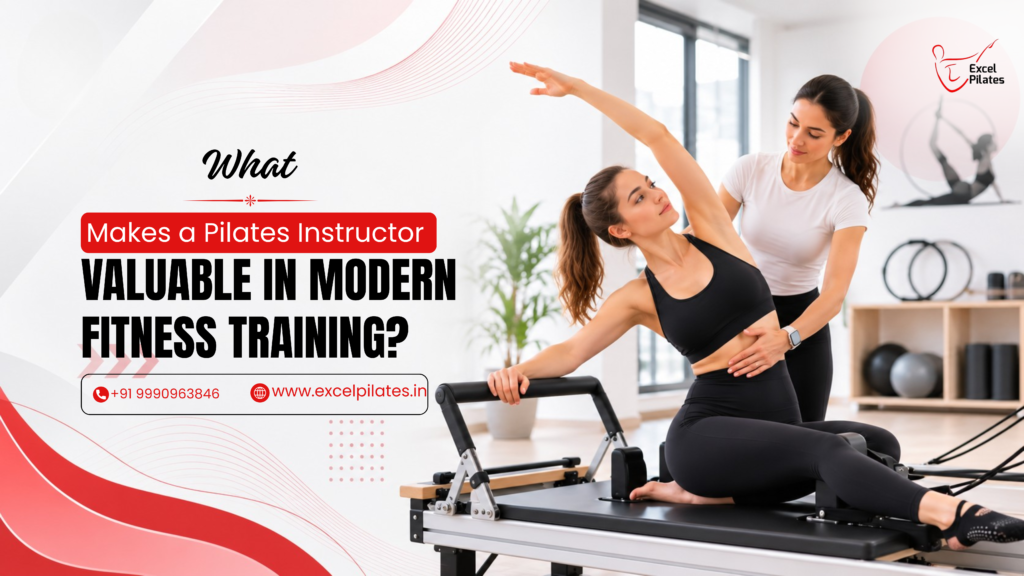
Table of Contents Walk into any fitness studio today, and you’ll notice something has shifted. People aren’t just chasing sweat and burnout anymore. They want workouts that respect their bodies, and that’s exactly why the role of a Pilates instructor has become so central to modern training. A good Pilates instructor doesn’t just count reps. They watch how you move, notice what your body is trying to tell them, and build sessions around that. Here we breaks down what actually makes an instructor worth your time, money, and trust. Pilates Instructor: More Than Just a Workout Coach Think about the last fitness class you attended. Did the trainer actually look at how your spine moved, or were they just calling out numbers? That difference is everything. A skilled pilates instructor blends anatomy knowledge with genuine coaching instinct. They’re reading your posture, your breathing pattern, even the slight hesitation in your movement. Here’s what separates a valuable instructor from an average one: This is what turns a session on a mat or a Pilates reformer into something that actually changes how you move through daily life. Finding the Pilates Instructor Who Fits Your Goals Not every instructor suits every body. That’s just the truth, and it’s worth accepting early. If you’re searching for best pilates classes near me, don’t just look at studio photos or star ratings. Ask a few direct questions first. What to check before you commit: If you’re based locally and searching for a pilates studio near me in South Delhi, visiting in person before signing up makes a real difference. You get to feel the energy, check the equipment, and see how the instructor interacts with existing students. Safety Standards in Structured Pilates Training Pilates looks gentle from the outside. It really isn’t always. On a Pilates reformer, springs, straps, and resistance can go wrong fast without proper guidance. A valuable instructor treats safety as non-negotiable, not an afterthought. Here’s what proper safety practice actually involves: When these standards are missing, injuries happen quietly, often showing up days later as unexplained soreness or strain. That’s the hidden cost of an unsupervised or rushed Pilates workout. FAQs 1. How is pilates different from a regular gym workout?Pilates focuses on controlled movement, core stability, and alignment rather than raw exertion. It builds strength from the inside out. 2. Do I need prior fitness experience to join pilates classes?Not at all. Most instructors design beginner-friendly sessions and build intensity as your body adapts. 3. How often should I attend pilates sessions weekly?Two to three sessions a week is a solid starting point for noticeable improvement in strength and posture. 4. Is reformer pilates better than mat pilates?Neither is “better” outright. Reformer adds resistance and support; mat relies more on bodyweight control. A good instructor picks what suits you. Assessment-Based Exercise and Movement Planning Cookie-cutter plans don’t work long-term, and honestly, most people know this already deep down. That’s why assessment-based training matters so much. Before designing your program, a genuinely skilled instructor evaluates your posture, breathing pattern, flexibility, and any pain points. From there, they build a plan that evolves with you. At Excel Pilates, South Delhi, this is exactly the approach followed. Every client starts with a proper movement assessment, not a generic routine pulled off a template. Whether you’re recovering from an injury, chasing better posture, or simply want a smarter workout, the sessions are structured around what your body actually needs. 📞 Call now at 9990963846 to book your assessment and experience training that’s built around you, not the other way around.