
Pilates Strength Workout for Better Core Strength and Stability
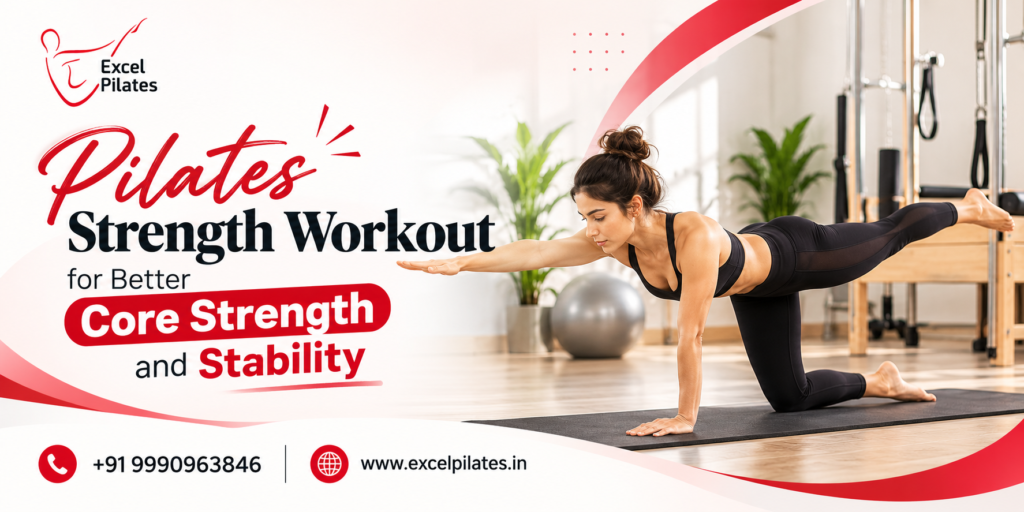
You know that feeling when your body feels tired even though you have not done anything particularly strenuous? Maybe you have spent hours at your desk, climbed a few stairs, or simply gone through a busy day. By evening, your back feels stiff, your posture has changed, and you realise how much work your body does just to keep you moving. This is where a Pilates Strength Workout can make a real difference. Pilates is not about rushing through dozens of repetitions. It is about slowing down, paying attention, and making your muscles work properly. With regular practice, those small, controlled movements can build impressive strength, especially around your core. Pilates Strength Workout: Where Slow Movements Start Feeling Surprisingly Powerful At first glance, a Pilates exercise may not look difficult. There are no heavy weights crashing onto the floor and no endless jumping. But hold a position for a few seconds with the correct form, and you quickly realise that your muscles are working. That is one of the things people often discover when they begin Pilates. The workout focuses on controlled movements that challenge your muscles while asking you to maintain balance and proper alignment. Over time, this can help with: The best part is that the exercises can be adjusted as your strength improves. What feels challenging today may become comfortable a few weeks later. Your Core Is More Than Just Your Abdominal Muscles When people talk about core strength, the first thought is usually toned abs. But the core has a much bigger job. It supports your spine, helps stabilise your pelvis, and gives your arms and legs a steady base from which to move. If the centre of your body is weak, even simple movements can feel less controlled. Pilates works on this foundation through exercises such as bridges, planks, leg movements, roll-downs, and abdominal sequences. As an Exercise for Core Strength, it encourages you to use your muscles with intention rather than relying on momentum. A good Pilates Instructor also helps you understand what you should actually be feeling during each movement. Reformer Pilates: When Resistance Changes the Game There is something satisfying about stepping onto a Reformer and seeing all the springs, straps, and moving parts. It may look complicated initially, but each element has a purpose. Reformer Pilates introduces resistance while allowing movements to remain controlled. A simple-looking leg exercise can suddenly become much more challenging when the springs are involved. The same goes for exercises targeting your arms, back, hips, and core. The resistance can be changed according to your level and goals, making Reformer work suitable for beginners as well as people who have been exercising for years. More resistance does not always mean better results, though. Good form still comes first. Why Your Instructor Notices Things You Don’t During a Pilates Workout, you may think you are doing everything correctly. Your instructor might see something completely different. Perhaps your shoulders are creeping upwards. Maybe your lower back is taking over. Perhaps you are holding your breath without realizing it. These tiny details matter. An experienced Pilates Instructor can make small corrections that change the entire exercise. You learn where to place your feet, how to position your spine, when to breathe, and how to engage the right muscles. Eventually, you start noticing these things yourself. That awareness can become useful far beyond the Pilates Studio. Strength That Follows You Outside the Studio The real test of a workout is not always what happens during the session. It is what you notice afterward. Maybe you sit at your desk without constantly adjusting your position. Perhaps climbing stairs feels easier. You may find yourself standing taller while waiting in a queue or carrying groceries without feeling as unsteady. These everyday changes can be easy to overlook because they happen gradually. A consistent Pilates routine works towards creating a body that feels stronger and more capable, rather than simply making you tired for an hour. Give Your Body Time to Get Stronger You do not need to start with advanced exercises. In fact, starting with the basics is often the smartest approach. Learn the movements. Understand your breathing. Build control. Then gradually increase the challenge. At Excel Pilates, sessions can help you work on strength, stability, flexibility, and better movement in a supportive setting. Whether you are trying Pilates for the first time or looking to take your practice further, the right guidance can make the journey easier. A stronger core is not built in one session. It comes from showing up, paying attention, and giving your body a chance to improve. Sometimes, the smallest movement can be the beginning of a much stronger body. Ready to get started? Explore Pilates at Excel Pilates and discover what your body can do with the right training.
Is Reformer Pilates a Good Workout for a Busy Lifestyle?
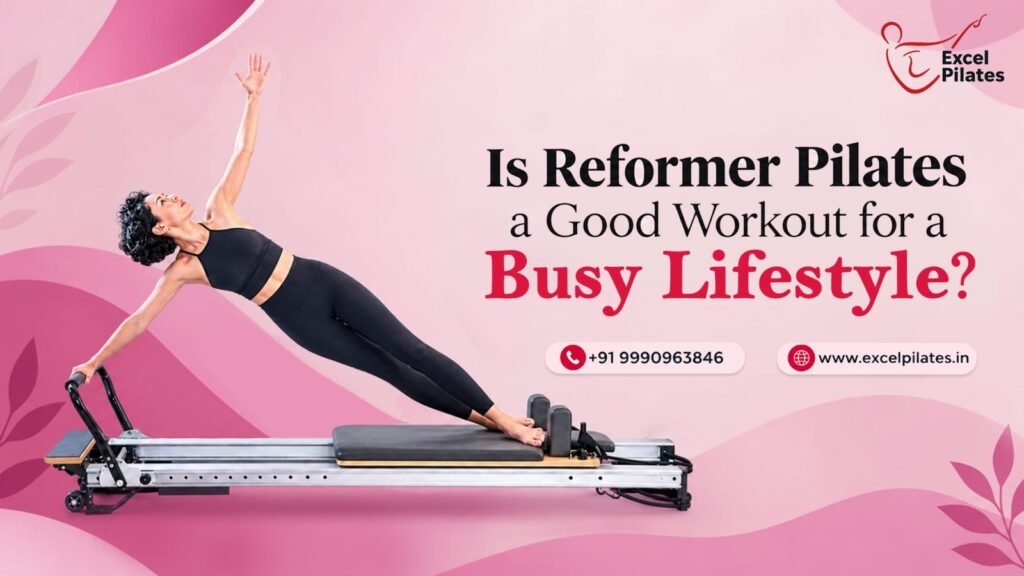
When your day is full of work, family, and traffic, exercise is the first thing you skip. You know you should move more. You just don’t have the time or the energy left. This is where Reformer Pilates helps. The sessions are short and planned for you, and they work your whole body without making you too tired for the rest of the day. Let’s see how it fits into a busy week. Where Reformer Pilates Fits Into a Packed Day More Movement, Less Time: What a Session Covers One reformer class works many parts of your body together. The machine has springs and a sliding carriage that add resistance, so your core, legs, arms, and back all get worked in the same session. A class usually starts with a warm-up, moves into strength work, then some stretching, and ends slowly. Because every move is slow and controlled, you build strength and flexibility at the same time. Your Pilates instructor changes the spring load and pace to suit you, which keeps the class safe for your joints. This is one of the main pilates workout benefits people love: a full-body workout in about an hour, and you walk out feeling light and energized instead of drained. What Changes When Reformer Pilates Becomes Consistent? FAQs 1. How often should I do Reformer Pilates if I have very little time?Two to three classes a week is a good start. It is enough to build strength and flexibility, and it fits around work and family. 2. Do I need any experience before I join?No. Beginners are welcome. The instructor will show you how the equipment works and change the exercises to match your comfort level. 3. Is a 45- to 60-minute class really enough?Yes. Each exercise works many muscles at once, so one class covers a lot. Coming regularly matters more than making the class longer. 4. Is Reformer Pilates only for weight loss?No. People join for posture, strength, flexibility, recovery from injury, or stress relief. Some people lose weight too, but that is only one reason among many. Make Your Move With Excel Pilates A busy life is no reason to ignore your health. Reformer Pilates gives you a full-body workout in a short time, with someone guiding you throughout. You may be looking at options like Reform by The Pilates Studio, or searching for a Pilates studio near me in South Delhi. Whichever you choose, pick a place where you feel comfortable and want to come back. At Excel Pilates, you get: Book your first session with Excel Pilates and see how easily Reformer Pilates fits into your week.