
Scroll through your phone for five minutes and odds are you’ll bump into it — someone standing with their back pressed flat against a wall, legs bent at an angle that looks slightly uncomfortable, sweating but still smiling for the camera. That’s the pilates wall exercise, and right now it’s everywhere. It isn’t just a random trend that showed up overnight either. At its core, this is regular Pilates with one clever twist — a wall doing double duty as both a prop and a resistance tool. No machines, no membership card, nothing to carry home from a store. Just an empty wall and a bit of floor space.
So if you’ve caught yourself wondering what the fuss is really about, or whether it’s worth your time, stick around. We’ll get into it properly below.
Have a Look: Wall Changes the Way You Exercise
A wall seems like a strange thing to build an entire workout around. But once you actually try it, you notice the difference almost immediately.
For starters, your back gets something solid and flat to line up against — which, honestly, makes slouching almost impossible without you noticing right away. Leg raises and glute work suddenly feel heavier too, since the wall is quietly acting as resistance even though there’s no equipment involved.
Your core doesn’t get a break either. It has to stay switched on the entire time, otherwise you lose your balance and slide out of position. And because there’s a wall in the way, you can’t swing or use momentum to cheat through a rep — everything slows down and becomes far more deliberate.
Here’s an easy way to picture it: lie flat on the floor and lift your legs up, and gravity quietly helps you along. Now try the same move standing against a wall — there’s nowhere left to hide, and your muscles are forced to do the actual work.
That, more than anything, is why the pilates wall exercise took off online in the first place. It looks almost too simple on video. Anyone who’s actually tried it, though, knows the burn kicks in faster than expected.
What Does Pilates Wall Exercise Really Support in Fitness?
This isn’t some workout people only do for social media likes — it genuinely helps with quite a few fitness goals at the same time, which is unusual for something this gentle on the joints. Here’s what it brings to the table:
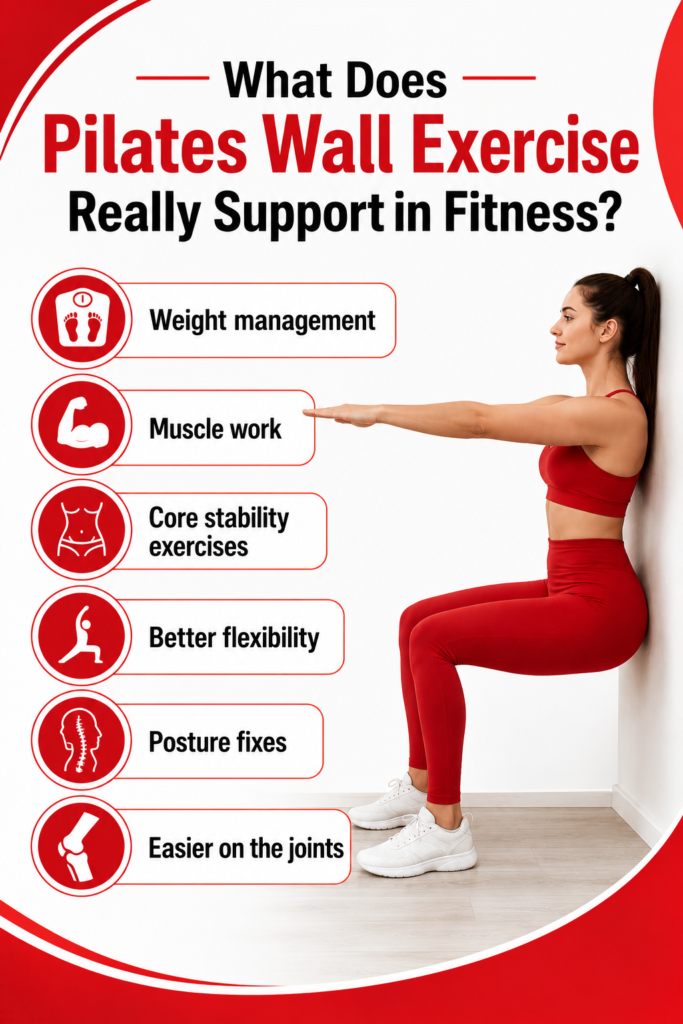
- Weight management — slow, held reps keep your heart rate up longer than you’d guess from watching a clip of it.
- Muscle work — glutes, hamstrings, and calves take on most of the effort, along with the deeper core muscles most people forget about.
- Core stability exercises —baked right into the movements nearly every position asks your core to brace, so you’re training stability without doing a single crunch.
- Better flexibility — the wall gives your body a safe surface to stretch against, so you can push a little deeper without wobbling around.
- Posture fixes — pressing your spine flat against a wall, again and again, slowly retrains your body to hold that same alignment even once you walk away.
- Easier on the joints — there’s a lot less pounding on your knees and hips than you’d get from high-impact routines.
A single session usually takes somewhere between 15 and 30 minutes, and you don’t need a Pilates background to get started. Pair it with a strength or cardio day here and there, and your body tends to respond faster than most people expect.
The real appeal is that you end up building strength and stability at the same time, without ever pushing your joints past their limit.
Is This Workout Suitable for Your Fitness Level?
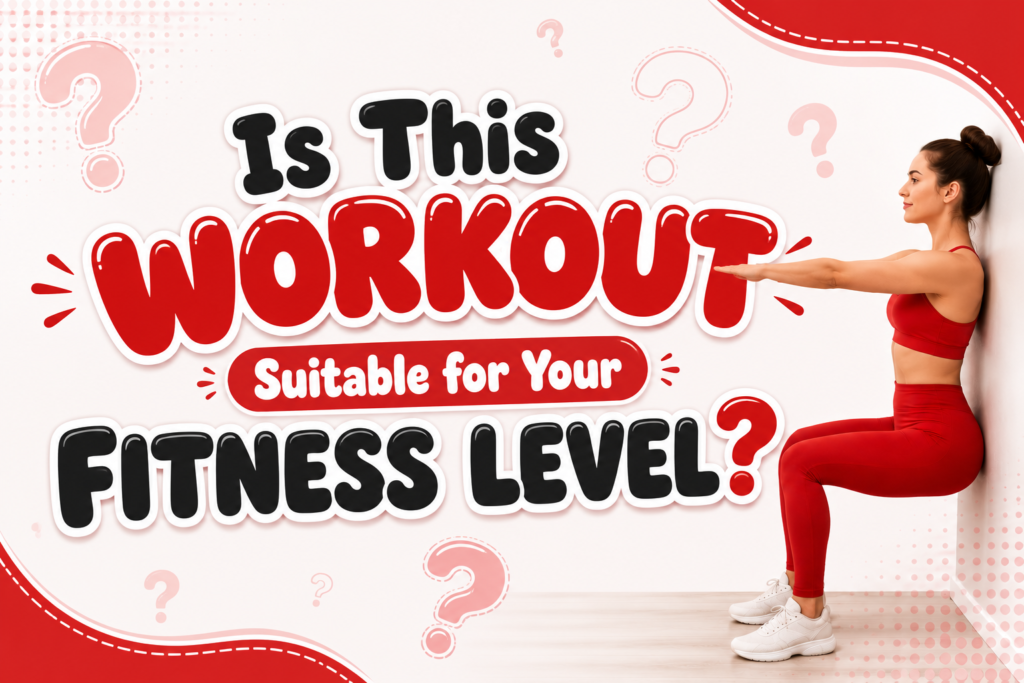
Short answer — yes, and that’s honestly a big reason it’s caught on so quickly. Whether you’re brand new to exercise or you’ve been doing a pilates workout routine for years, the wall bends around your level rather than the other way around.
If you’re just starting out, a few things go a long way:
- Keep your reps low at first and pay more attention to form than to counting.
- Press your lower back gently into the wall and try to keep it there through each move.
- Breathe steadily — holding your breath during the tougher reps only tires you out faster.
- Don’t rush through the exercise just to get it over with.
- Avoid locking your knees while your legs are lifted.
- Skip the warm-up at your own risk, even if the workout looks gentle.
For people who’ve been at this a while, the wall still has plenty to offer. It’s often used for isometric holds and slower tempo work, both of which crank up the intensity without needing any extra gear.
One more thing worth mentioning — if you’re recovering from an injury, currently pregnant, or managing a chronic condition, it’s worth having a quick word with a certified instructor before diving in. A short chat at the pilates studio near me can help shape a routine that actually fits what your body can handle right now.
Want Better Results from Every Pilates Session?
Practising wall Pilates at home is a solid way to start, no argument there. But guided sessions genuinely take things further. A trained instructor notices the small mistakes in your form that you’d probably never catch on your own — and fixing those little things is usually what separates okay results from great ones. If you’ve been hunting for pilates classes Delhi locals actually trust, or trying to find the best pilate studios with trainers who know what they’re doing, this part’s for you.
📍 Excel Pilates | South Delhi 📞 Call us now at 9990963846
Widely known as one of the Best Pilates in South Delhi, Excel Pilates runs sessions that mix mat work, wall-based routines, and equipment training — all built around what you actually want, whether that’s dropping weight, bouncing back from an injury, or simply building leaner muscle.
Pro Tip: Showing up regularly wins over going hard once in a while. Three properly guided sessions a week will get you further than seven rushed ones done solo at home.
FAQs
1. Can beginners try pilates wall exercise without any prior training?
Yes, no experience needed. If anything, the wall makes movements easier to control, which is exactly why it works so well as an entry point for total beginners.
2. How is wall Pilates different from regular mat Pilates?
Mat work depends almost entirely on your own body control, whereas wall Pilates leans on the wall for added resistance and support — which makes certain core stability exercises feel sharper and more precise.
3. How soon will I actually see results from this workout?
Stick with it around 3 to 4 times a week, and most people start noticing better posture and stronger core muscles within about a month, with visible toning usually following not long after.